
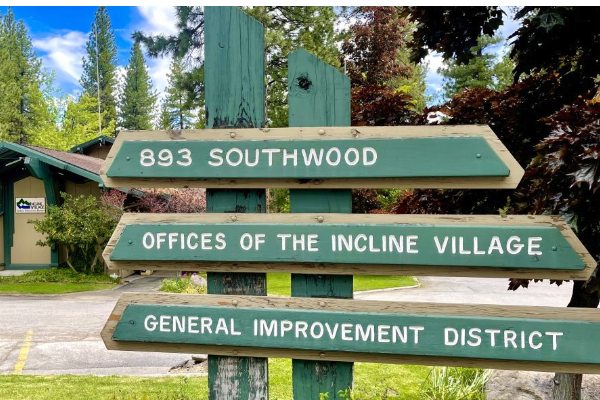
The January 28 meeting of the Incline Village General Improvement District Board of Trustees was more consequential than the agenda might have suggested.
Behind routine approvals, trustees worked through three topics that will shape IVGID’s financial and operational direction for years to come:
- Cleaning up past accounting tied to capital assets.
- Launching the formal Water & Wastewater Rate Study alongside a budget workshop.
- Debating and amending a new Employee Separation Incentive Program (ESIP).
Here’s what residents should understand.
Financial Cleanup: A $1 Million Book Adjustment
Trustee Homan noted that approximately $1 million in capitalized assets may require partial write-offs due to prior period accounting errors and the early completion of the effluent pipeline.
This is not new spending. It is a correction to how past costs were recorded. Expect additional clarity when the Audit Committee issues its formal report in April.
Whistleblower Complaint on the Beach House: Closed
A legal review addressed an anonymous whistleblower complaint tied to the Incline Beach House construction contract. Legal counsel concluded the complaint had no merit. A formal Audit Committee report will be issued in April to document and close the matter.
Rate Study and Budget Workshop
HDR Engineering guided trustees through Phases One and Two of the upcoming utility rate study while the board simultaneously held a detailed budget workshop. These efforts are closely connected.
Phase One will take place this year (2026) and develops a comprehensive financial model for both water and wastewater utilities:
- Compare revenues to operating and capital expenses
- Determine the revenue required to sustain the systems
- Set rates for a two-to-five-year period
- Adjust the current rate structure to meet financial needs
Each utility is evaluated as a standalone enterprise fund supported primarily by rate revenue. The timeline for this project will provide draft results in April, final adoption in May, and new rates (if adopted) in July.
If authorized in next year’s budget, Phase Two begins in February 2027 and examines:
- How customer classes use the system
- Residential vs. commercial demand
- Peak capacity, average usage, and wastewater strength
- Alternative rate structures aligned to actual system use
It has been three years since IVGID last completed a cost-of-service study. Trustees emphasized compliance with NRS 318 and NRS 199, which require a public hearing and a 30-day published notice before final rate adoption. That notice will be published immediately after April’s draft review.
Budget Workshop: Clearer Financial Presentation Requested
As the rate discussion unfolded, trustees shifted into a working budget session for both the General Fund and Utility Funds. Trustees asked for:
- Rolled-up budget views (total water, total sewer).
- A “percent used” column pulled directly from Tyler financial software.
- Clearer breakdowns between sub-departments and totals.
- Future workshops focused on revenues and expenses rather than “sources and uses.”
- Venue-level budget detail for Community Services at the February 11th meeting.
- A central contingency metric rather than scattered departmental contingencies.
Staff also noted cost savings in utilities from improved electricity, cable, and IT efficiency.
Employee Separation Incentive Program (ESIP)
Trustees spent considerable time discussing the proposed ESIP, designed to create voluntary vacancies that may streamline costs and improve efficiency. The HR Director indicated five employees may be considering the program.
What ESIP Offers
- Voluntary participation.
- 45-day election window: February 2nd – March 19th.
- Payout of 1 week of pay per year of service, capped at 26 weeks.
- Separation date set by the General Manager to allow knowledge transfer.
Trustees directed that Legal and HR consult with the General Manager before any ESIP application is approved. They also requested a detailed fiscal impact analysis outlining projected costs, savings, and overall budget effects, along with revised General and Utility budgets that reflect potential ESIP outcomes before the tentative budget is presented. Finally, trustees emphasized that separation timing must be managed carefully to preserve operational continuity and ensure appropriate knowledge transfer.
Why This Matters
These discussions directly affect residents through future utility rates, service delivery, staffing, and IVGID’s long-term financial stability. The rate study, budget refinements, and ESIP analysis will continue to unfold over the next several months.
If you want to see the full discussion, the meeting video is available on the IVGID website and offers valuable context behind these decisions. Make sure to click on the “Meeting Media” tab on the left hand side of the screen. Click for Video
And if you value clear, factual summaries that explain what happened and why it matters, consider subscribing to our newsletter to stay informed as these topics move forward.
Author: Kristie Wells