
Author: Kristie Wells
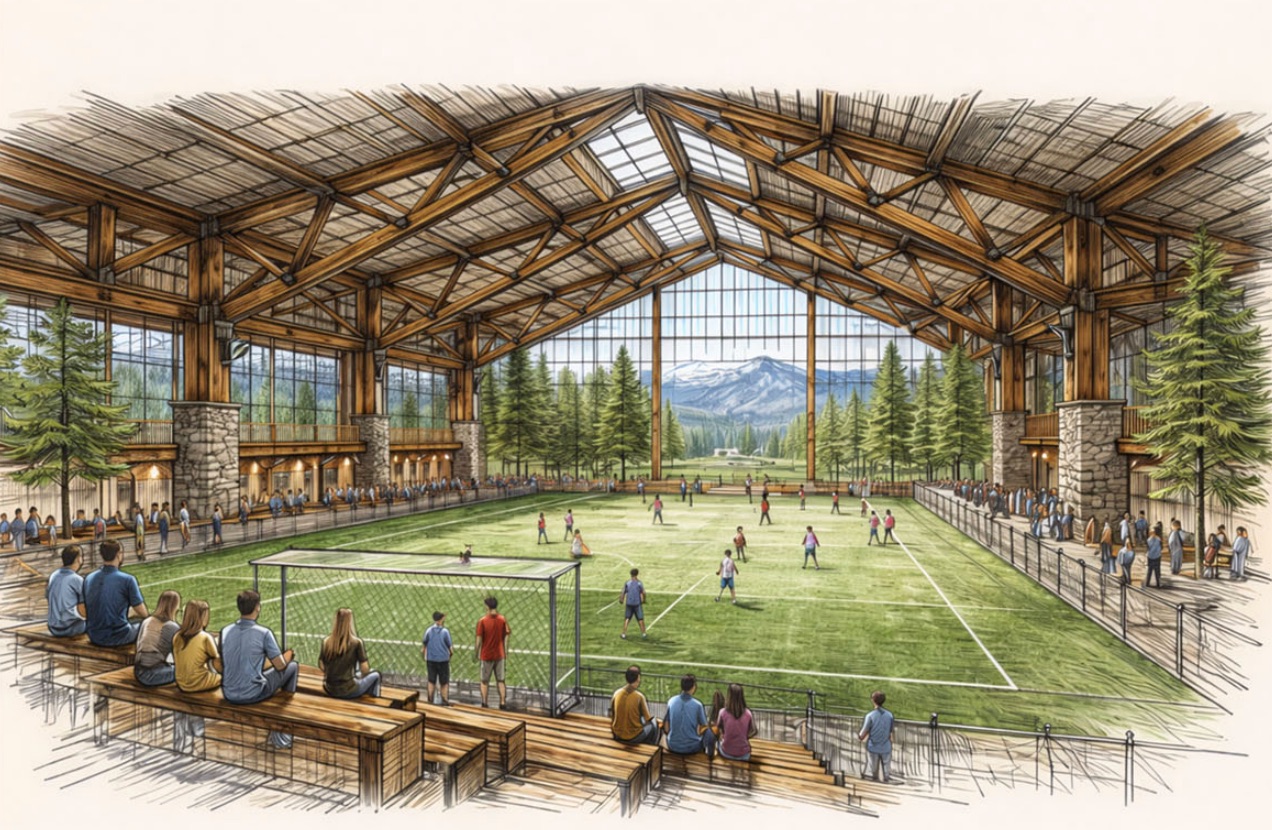
As the Tahoe Transportation District hears a proposal for the Incline Sports Arena [LINK], residents have an opportunity to learn more about the future of the former Incline Elementary site and participate in a conversation that is still unfolding.
What You Need to Know
- No vote is scheduled on the future of the former Incline Elementary property. On Wednesday, the Tahoe Transportation District Board will hear a presentation on the proposed Incline Sports Arena, introducing another vision for the site’s future.
- The discussion is expanding beyond a single proposal. With multiple ideas emerging for the property, many residents are asking whether the community should have a greater voice in determining its long-term use.
- Workforce housing remains an important part of the conversation. While there is broad support for housing local teachers and essential workers, questions remain about whether the federal affordability requirements associated with the Reno Housing Authority proposal align with Incline Village’s workforce housing needs.
- Local organizations are calling for more public engagement. IVGID has requested that TTD host a dedicated public meeting in Incline Village before any future property transfer and has offered The Chateau as a venue.
- Residents can attend Wednesday’s meeting in person or online to learn more about the discussion and provide public comment.
On Wednesday afternoon, the future of the former Incline Elementary School property will once again be discussed as the Tahoe Transportation District Board convenes to consider another vision for one of Incline Village’s most important public assets.
The Board will hear a presentation from community members proposing the Incline Sports Arena, introducing another concept for the former elementary school site at 771 Southwood Boulevard.
While the presentation itself is important, its greatest significance may be what it represents.
For much of the past year, public discussion surrounding the former Incline Elementary property has focused on a single concept: transferring the site to the Reno Housing Authority as part of a proposed Transit-Oriented Development.
Wednesday’s presentation introduces another possibility.
Whether residents ultimately support or oppose the proposed Incline Sports Arena is not the central issue. Rather, the proposal demonstrates that there are multiple ideas for how this property could serve the community.
That shifts the conversation from evaluating a single project to considering a broader question:
Before any long-term decisions are made, should the community have the opportunity to compare multiple visions for the property and help determine which best serves Incline Village’s future?
More Than a Single Development Proposal
The former Incline Elementary site presents a rare opportunity. Publicly owned land of this size is increasingly scarce in Incline Village, making the decisions surrounding its future especially significant. Whatever is ultimately built there will influence the community for decades.
That is why many residents believe the conversation should extend beyond evaluating individual proposals.
The proposed Incline Sports Arena, the Reno Housing Authority concept, workforce housing, recreation, transportation, education, and other public uses are not necessarily competing conversations. Together, they represent different ideas for how this unique property could benefit the community.
Many residents believe now is the appropriate time to step back and ask a broader question before one direction becomes permanent.
What does Incline Village need most?
And who should help answer that question?
Workforce Housing is not the Debate
Few people disagree that Incline Village needs more housing for its workforce.
Teachers, healthcare professionals, hospitality employees, public safety personnel, and other essential workers increasingly struggle to find housing they can afford in the community they serve. Local employers, schools, and nonprofits have all identified housing as one of the community’s greatest long-term challenges.
The question being raised is not whether workforce housing is needed. It is whether the current proposal is structured to meet that need.
Much of the public discussion surrounding the Reno Housing Authority proposal has described it as workforce housing. As more information has become available, however, residents have begun asking whether the federal affordability requirements attached to the project align with the realities of Incline Village’s workforce.
Under the Federal Transit Administration’s Transit-Oriented Development program, at least 40 percent of the affordable housing units must serve households earning 60 percent or less of the Area Median Income (AMI). Within that requirement, approximately 8 percent of the project’s total units must be reserved for households earning 30 percent AMI or below. If federal Low-Income Housing Tax Credits are used to finance the project, the development generally must maintain an average affordability level of 60 percent AMI or less.
Those requirements are intended to meet important federal affordable housing objectives.

Some residents, however, question whether they reflect the housing challenges facing Incline Village. Many teachers, nurses, sheriff’s deputies, hospitality workers, and other members of the local workforce earn more than the federally targeted income levels while still being unable to afford housing in the community.
That distinction has become a central part of the conversation.
Supporters of additional public discussion are not asking whether affordable housing is important. They are asking whether the affordability requirements associated with the current proposal best address the workforce housing needs Incline Village is trying to solve.
The question being raised locally is different.
Many teachers, healthcare workers, hospitality employees, and first responders earn more than those federally defined income levels while still being unable to afford housing in Incline Village.
Some residents believe the community deserves a transparent discussion about whether the affordability model associated with the current proposal addresses the workforce housing challenges Incline Village is trying to solve.
What Does AMI Mean?
The income limits discussed in the Reno Housing Authority proposal are based on household size. The figures most often referenced publicly apply to a family of four.
For one- and two-person households, the maximum qualifying incomes are significantly lower. That means many single professionals, young couples, and other smaller households could earn too much to qualify for housing under the proposed affordability requirements, even if they are unable to afford market-rate housing in Incline Village.
Understanding how Area Median Income (AMI) is calculated is important when evaluating who the proposed housing would ultimately serve.
Community Organizations Agree on One Thing: The Conversation Should Continue
As discussion surrounding the former Incline Elementary property has evolved, so too have the voices participating in it.
While organizations may differ on how the property should ultimately be used, many share a common belief: the community should have the opportunity to fully understand the options before long-term decisions are made.
In a recent letter to the Tahoe Transportation District, the Incline Village General Improvement District (IVGID) requested that TTD hold a dedicated public meeting in Incline Village before any future property transfer occurs.
IVGID acknowledged TTD’s desire to remove the property from its real estate portfolio but questioned whether the proposed Reno Housing Authority development has been demonstrated to be an essential component of a Transit-Oriented Development project. The District also noted that it has not seen plans indicating a transit hub is expected to be constructed on the site.
Rather than advocating for a particular outcome, IVGID asked for greater transparency.
The District requested that residents have an opportunity to review the complete proposal, understand the federal affordability requirements associated with the project, ask questions, and participate in an open discussion before future decisions are made. To support that effort, IVGID offered the use of The Chateau meeting room at no cost.
The Incline Education Fund (IEF) approached the issue from a different perspective.
In its letter, the organization focused on the community’s urgent need for workforce housing, particularly for educators. According to the IEF, only 35 percent of elementary school staff, 45 percent of middle school staff, and just 17 percent of high school staff currently live within the Tahoe Basin.
For the organization, helping teachers live in the community they serve is an investment in educational excellence, stronger schools, and the long-term vitality of Incline Village.
Taken together, the two letters illustrate the broader conversation now unfolding.
The question is no longer whether workforce housing matters.
Nor is it whether additional recreational opportunities would benefit the community.
Instead, the discussion has expanded to a larger question:
How can this property best address the community’s priorities, and how should those priorities be determined?
A Conversation Worth Having
Wednesday’s meeting is not expected to determine the future of the former Incline Elementary property.
It may, however, mark an important turning point.
For the first time, the Tahoe Transportation District Board will hear another community vision for the site, broadening a conversation that has, until now, largely centered on a single proposal.
Whether residents ultimately support workforce housing, an indoor sports arena, another public use, or some combination of ideas, one message has emerged consistently throughout the discussion:
The community wants the opportunity to understand the options before long-term decisions are made.
That opportunity may be more important than ever.
According to the Reno Housing Authority’s proposed project timeline, the process could begin moving quickly after this summer, with a request to the Federal Transit Administration anticipated this month, issuance of a Request for Qualifications by the end of the year, selection of a master developer in early 2027, and construction potentially beginning as early as the summer of 2028.
While those milestones remain part of a proposed schedule rather than a final decision, they illustrate why many residents believe this is the time for a broader public conversation.
Communities rarely get a second chance to determine how public land will serve future generations.
The former Incline Elementary site represents one of those rare opportunities.
The decisions made over the coming months may shape Incline Village for decades. Whether the future includes workforce housing, recreation, education, another public use, or a combination of ideas, many residents believe that future should be shaped through an open, transparent process that gives the community a meaningful voice before the path forward is chosen.

Attend the Meeting
Tahoe Transportation District Board Meeting
Wednesday, August 5, 2026
3:00 p.m.
In Person
Tahoe Regional Planning Agency
128 Market Street
Stateline, NV 89449
Attend via Zoom
https://us06web.zoom.us/webinar/register/WN_W7YkI6gURwmdCGSVlp6_qw
Review the Agenda Packet and Presentation
https://tahoetransportation.org/wp-content/uploads/2026/07/2026-8-5-TTD-C-Board-Agenda-Packet.pdf
Related Posts