
You woke at the crack of dawn. You poured a large sized cup of coffee into a travel mug. Then you drove to Truckee (the closest office) and handed a government agency $10. Or, you might have embraced this modern day age, went online, filled out a couple of fields, and managed to save yourself a little time.
No matter the path you chose, you were successful in securing a permit to cut a Christmas Tree within designated areas of the Tahoe National Forest! Good on you.
You then put on your coat, poured another cup of coffee into your travel mug, grabbed your people and your saw, and headed into the forest to find your perfect tree.
The U.S. Forest Service provides this opportunity to cut down “Christmas” trees in the designated areas of our forests as it improves forest health:
- The permit system helps to thin densely populated stands of small-diameter trees.
- Local forest health experts identify areas that benefit from thinning trees and tend to be the perfect size for Christmas trees.
- Removing these trees in designated areas helps other trees grow larger and can open areas that provide food for wildlife.
It also makes for a wonderful holiday tradition that can be enjoyed by families and friends alike.
Back to the cutting of trees. The process is simple; you identify your perfect tree, you cut it down (correctly), and load it into your car to take home. It is a win-win for the Forest Service, and our environment.
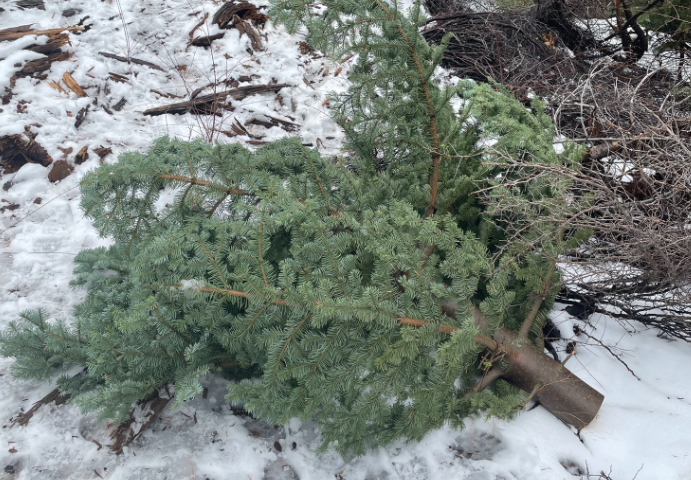
Some people, however, either didn’t read the guidelines fully or simply didn’t care and left parts of the tree scattered across popular Christmas tree cutting areas on the forest. When selecting and cutting a Christmas tree, it is critical that you take the whole tree! If the tree is too tall to fit in your vehicle or larger than you would like, you need to pick a different tree.

If you don’t plan to use the entire tree, you can repurpose the trimmings by creating garland, a wreath or other holiday decor. Leaving tree debris behind adds to fuel loading on the forest floor and can be a fire risk come drier months! Please don’t do this.
Here are seven tips as you prepare for your Christmas tree cutting adventure on your local forest:
- Measure the space in your house so you can pick the right size tree once you are in the forest.
- Check road and forest conditions and prepare for adverse weather.
- Make sure you are in a designated cutting area or follow guidelines for locations where tree cutting is allowed. Avoid venturing on to private property.
- Choose a tree in an overcrowded stand to help thin the area.
- Cut your tree close to the ground. The stump you leave behind should be about 6 inches.
- Bring a rope and tarp to move your tree from the cutting area to your vehicle.
- Secure your tree to your vehicle to ensure it remains in place for your trip home.
Above all, we hope you have a wonderful experience and create memories that help you bring home a story from your National Forest!